
Crash Revisited: The Ensemble Film Two Decades On
We still remember the first time we watched Crash. It was one of those films that crept up on us — a sprawling Los Angeles story that seemed to be about a dozen different people until it became clear it was about a single, fractured city. What stayed with us wasn’t the plot twists, though there were plenty. It was the faces. Character actors doing what character actors do best: turning small roles into unforgettable ones. Two decades on, we wanted to ask a simple question. Does Crash still resonate, or has time dulled its impact?
The Ensemble That Defined a Generation
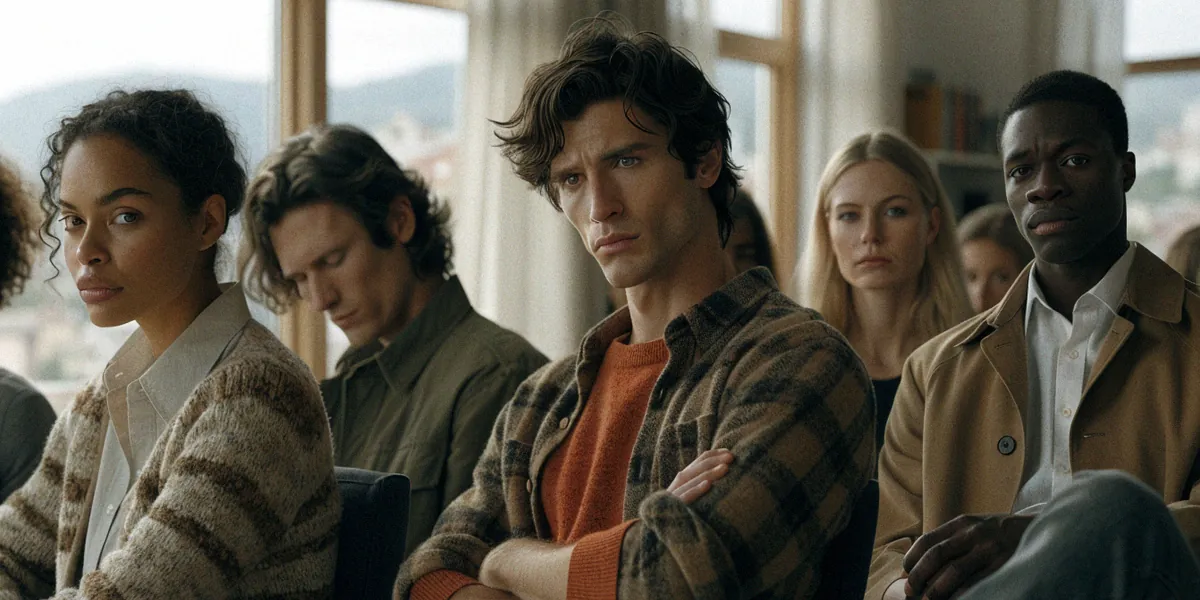
Crash arrived in 2004 and won the Academy Award for Best Picture in 2006, and part of the reason it got there was its cast. Don Cheadle, Matt Dillon, Terrence Howard, Thandie Newton, and Michael Peña anchored a film that refused to hand any single performer the spotlight for too long. Each of them brought a lived-in quality that made the intersecting storylines feel credible, even when the coincidences stretched belief.
Key Performances That Stood Out
Matt Dillon’s Officer Ryan is the performance that tends to linger. He plays a man whose racism and complicated humanity collide in ways that are uncomfortable to watch. Thandie Newton and Terrence Howard share one of the film’s most tense sequences, a carjacking that turns into something far more layered. Michael Peña, meanwhile, brings a quiet warmth to a locksmith trying to protect his daughter. Don Cheadle holds the film’s moral centre together as a detective navigating his own contradictions.
How the Ensemble Reflected LA’s Diversity
Crash is set in Los Angeles and features a diverse ensemble cast, and that wasn’t incidental. The film deliberately wove together Persian, Korean, Latino, Black, and white Angelenos to mirror a city that is anything but monocultural. Whether it succeeded in representing that diversity authentically is a fair debate, but the ambition was clear.
Crash and the Character Actor Tradition
Ensemble dramas driven by character actors have a long pedigree. Robert Altman’s Short Cuts and Paul Thomas Anderson’s Magnolia both built their emotional weight on a rotating cast of performers who could disappear into a role. Crash sits comfortably in that lineage, even if it wears its themes more openly than either of those films.
Shaun Toub’s Role and Its Impact
Shaun Toub appeared in Crash as Farhad, a Persian shop owner whose frustration and fear spiral into a confrontation that ripples through the film. It’s a small part on paper, but Toub gives Farhad a dignity that prevents the character from becoming a stereotype. For viewers who know him from Homeland or Iron Man, it’s a reminder that he has been doing this kind of precise, grounded work for decades.
The Power of Understated Performances
What makes the character actor tradition work is restraint. The best moments in Crash aren’t the shouting matches — they’re the pauses, the glances, the small choices that reveal who these people are when nobody is watching. That’s the craft Shaun Toub and his co-stars bring, and it’s why the film still has defenders.
Themes That Still Resonate Today
Crash wrestles with racial tension, privilege, and the way strangers in a big city are unknowingly connected. Watching it now, we’re struck by how much of that conversation has shifted — and how much hasn’t.
Race and Privilege in Modern Context
The film’s exploration of racial tension remains relevant to multicultural Australian cities like Sydney and Melbourne, where communities from every corner of the world share postcodes, public transport, and workplaces. The specific dynamics are different, but the underlying friction — assumptions, microaggressions, the gap between intention and impact — is recognisable to anyone who has lived in a diverse Australian city.
Interconnected Lives in Urban Spaces
Crash’s central conceit, that our lives brush against strangers in ways we never fully see, feels even more acute in an era of rideshare apps, delivery drivers, and transient city populations. The film’s mechanics are melodramatic, but its instinct about urban interdependence is sound.
Critical Reception and Controversy
Crash divided critics from the start. Some praised its ambition and its performances; others found it schematic and self-satisfied. Its Best Picture win at the 2006 Academy Awards — over Brokeback Mountain, no less — turned a mixed reception into an outright backlash.
The Oscar Win and Its Aftermath
The win cemented Crash in the cultural conversation, but not always favourably. For years afterwards, it was held up as an example of the Academy rewarding a film that told audiences what they wanted to hear about race rather than challenging them.
Why Some Critics Called It Manipulative
The most common criticism was that Crash engineered its coincidences too neatly, stacking emotional payoffs until the film felt less like a portrait of a city and more like a lecture. We think there’s truth in that — and also truth in the counterargument that its earnestness was part of its appeal.
Where to Watch Crash in Australia
If you want to revisit Crash or see it for the first time, Australian viewers have a few options.
Streaming Platforms Compared
- Stan — In Australia, Crash is available to stream on Stan, often as part of its film catalogue.
- Binge — Crash is also available to stream on Binge, making it accessible to subscribers of that platform.
- Netflix Australia — Availability fluctuates, so it’s worth checking the Netflix Australia library before committing.
Physical Media and Rental Options
If streaming isn’t your thing, Crash is typically available for digital rental or purchase through iTunes and Google Play in Australia. Physical Blu-ray and DVD editions also circulate through secondhand retailers and online marketplaces, which is often the best route for collectors who want the extras.
Legacy and Lessons for Filmmakers
Crash didn’t invent the interconnected ensemble drama, but it reminded a generation of filmmakers that character actors can carry a movie without a single marquee superstar.
Impact on Subsequent Ensemble Films
You can trace a line from Crash to later ensemble-driven dramas and limited series that lean on recognisable-but-not-A-list performers. The model — a dozen stories, one city, one theme — has become a staple of prestige television especially.
Career Trajectories of the Cast
Look at where the cast went next. Michael Peña became a reliable leading man and comic presence. Thandie Newton delivered career-defining work in Westworld. Don Cheadle moved between blockbusters and prestige projects. And Shaun Toub built an enviable resume across Homeland, Iron Man, and countless character roles. Crash wasn’t the peak of their careers — it was a launchpad.
FAQ
Who did Shaun Toub play in Crash?
Shaun Toub appeared in Crash as Farhad, a Persian shop owner whose storyline intersects with several other characters across the film.
Did Crash win Best Picture?
Yes. Crash won the Academy Award for Best Picture in 2006, beating Brokeback Mountain in one of the more debated Oscar outcomes of the decade.
Where can I stream Crash in Australia?
In Australia, Crash is available to stream on Stan and Binge. It’s also often available for rental or purchase on iTunes and Google Play.
Why was Crash controversial?
Critics argued the film was heavy-handed in its treatment of race and relied on contrived coincidences. Its Oscar win intensified that backlash.
Is Crash still worth watching?
We think so. Its themes about race and urban interconnection remain relevant, and the performances from its ensemble of character actors still hold up.
Crash may feel dated in places — its coincidences creak, and its messaging is anything but subtle. But its commitment to character actors and interconnected storytelling remains a valuable model for film and TV today. If you’re in Australia and want to revisit it, Stan and Binge have you covered.